EVERY MIGRANT/REFUGEE CAN CLAIM THEIR LABOR RIGHTS
This page contains some tips for migrant workers. These tips have been compiled after talking to a lawyer who specializes in labor issues. However, what you see here is not a legal document.
This information was collected by the Stop War on Migrants assembly, as an attempt to link the labor struggles of locals and migrants against organized border violence and state and social racism. We think that one of the main functions of borders and racism is to put people in a position of easier exploitation by the bosses. We hope that this leaflet will be useful to workers, both documented and undocumented, asylum seekers, holders of asylum or residence permits and people whose application has been refused.
In general, there are two ways for a worker to claim something at work (e.g., wages). Either by making a complaint to the employer, and together with a lawyer to take legal action against the boss, or by a social/political way, talking about the issue and intervening (individually or collectively) in the workplace and beyond. It is up to the worker whether to use one of the two ways, or both at the same time.
At Stop War on Migrants we can try to put you in touch with lawyers. At the same time we know that the legal system is part of state racism, and is not built to protect people from lower social classes. But together, locals and migrants, we can collectively fight against bosses, demanding legal wages for our work, and more.
You can find here an introduction to basic labor rights, depending on your
Stage of residence in Greece:
1.I am in Greece without papers (I am not registered anywhere, or I have a
negative answer to my asylum application).
2.I have applied for asylum (I have a red card).
3.I have a refugee or other category of residence permit, with the legal right to work.
- Once someone has worked, work has been provided, so they must be paid. When a
person is an undocumented foreign worker, he can work, but the law does not define his job
as a contract, but as a simple employment relationship. This means in practice that if this worker wants to claim accrued wages, benefits etc., he can do so. But he can only claim the legal minimum. The minimum wage is 780 euros (pre-tax, after tax is less than 700, from 1/4/2023), and it increases according to the years of work, the occupation, and the family status of the employee. So if he has agreed to get 1000 he can only ask for 780. If he has agreed to 500 (for full-time work), he can still claim 780 (or more). However, the migrant can claim money, allowances, overtime, gifts, on the basis of the minimum wage. To get them of course it is a matter of proof, he must be able to prove that he worked for so-and-so on so-and-so days etc. Even if you sign any paper (document) it will be invalid. However it can be used by your lawyer for other reasons.
The question is, how dangerous is the claim for the worker. The biggest risk is that the employer will report him to the authorities in retaliation – that is, that he is undocumented. Of course the employer will not report that he had hired him illegally because he exposes himself.
- Once a person obtains a red card, he or she is entitled to certain rights such as health care. But one can only work legally after 6 months (2 months with the new amendment) have
passed since getting the card. If the asylum decision is made the 6 (or 2) months stop counting. If the decision is negative see paragraph 1. If the decision is positive see paragraph 3.
- In such cases it is always a good idea for the employee to ask to sign an employment
contract. If the contract you are given is not written in a language you know, you can ask a
trusted person to help you translate it. You can contact us and we can try to find a translator. If you have signed something in Greek without knowing what it says, it does not necessarily mean that the contract is valid. That means that if you decide to claim in court, for example, for accrued wages, you can use the fact that you did not know what you signed as evidence. It is important to see if everything is legally observed at work by going to your individual insurance account at efka.gov.gr (see below for explanations). Many times employers report other things than what they tell you. If you suspect that you should get more money than your boss gave you, you can find out what you were paid and why either online (efka.gov.gr), by asking your employer for a receipt, or from your contract.
(You might be entitled to many things that you are not aware of, such as a paid break in the eight-hour period, vacation, night shift payment, extra pay on Saturdays, Sundays and holidays, holiday allowance, easter, christmas payment, etc).
*This category also includes residence permits with special work status, such as seasonal work, and the new work permits expected to be issued to those already residing in Greece from November 2020.
Here are some INDICATIVE definitions of legal/working terms
- SEPE (Labour INSPECTORATE) Independent state/administrative authority that receives complaints of violations of workers’ rights, non-compliance with measures for their safety and health and conducts relevant investigations, different from the procedure in the courts.
- OAED (now DYPA) A public service providing assistance and benefits to special categories of workers, mainly the unemployed. Assistance and benefits are provided under certain conditions.
- ΑΦΜ: a 9-digit number given to every taxpaying citizen. If you belong to the second category, ΑΦΜ is provided by the Asylum Office at the time you receive the card. ΑΦΜ will be valid throughout the asylum process, but will be deactivated if someone receives a final refusal. ΑΦΜ is needed for other things besides legal work, e.g. renting an apartment. For holders of residence permits, it can be obtained through the competent tax office or on https://myaadelive.gov.gr/
- (Π.Α.Α.Υ.Π.Α.) Number assigned to applicants for international protection for the needs of health care, access to health services, the labor market and social security. The Π.Α.Α.Υ.Π.Α. is indicated on the red card of an applicant for international protection issued by the Asylum Service and remains active throughout the examination of the application for international protection. https://www.amka.gr/have-paaypa/?fbclid=IwAR2ji6M4E6FzvWBq50KL2gbsNZXe2LfBP40fiRI3ZSHLH9RuFx1nAgZyPXw Once a person obtains a residence permit, he or she can be issued with an AMKA which has the same use and is not revocable.
- taxisnet: Taxisnet is an information system that allows some transactions with public services to be carried out electronically, The issuing of codes is done in myAADE (myaade.gov.gr)
- EFKA: State social security institution for all workers
- AMA: As soon as a person becomes insured with EFKA, he/she acquires a unique AMA number
To access the Individual Insurance Account (efka.gov.gr)
- Go to efka.gov.gr
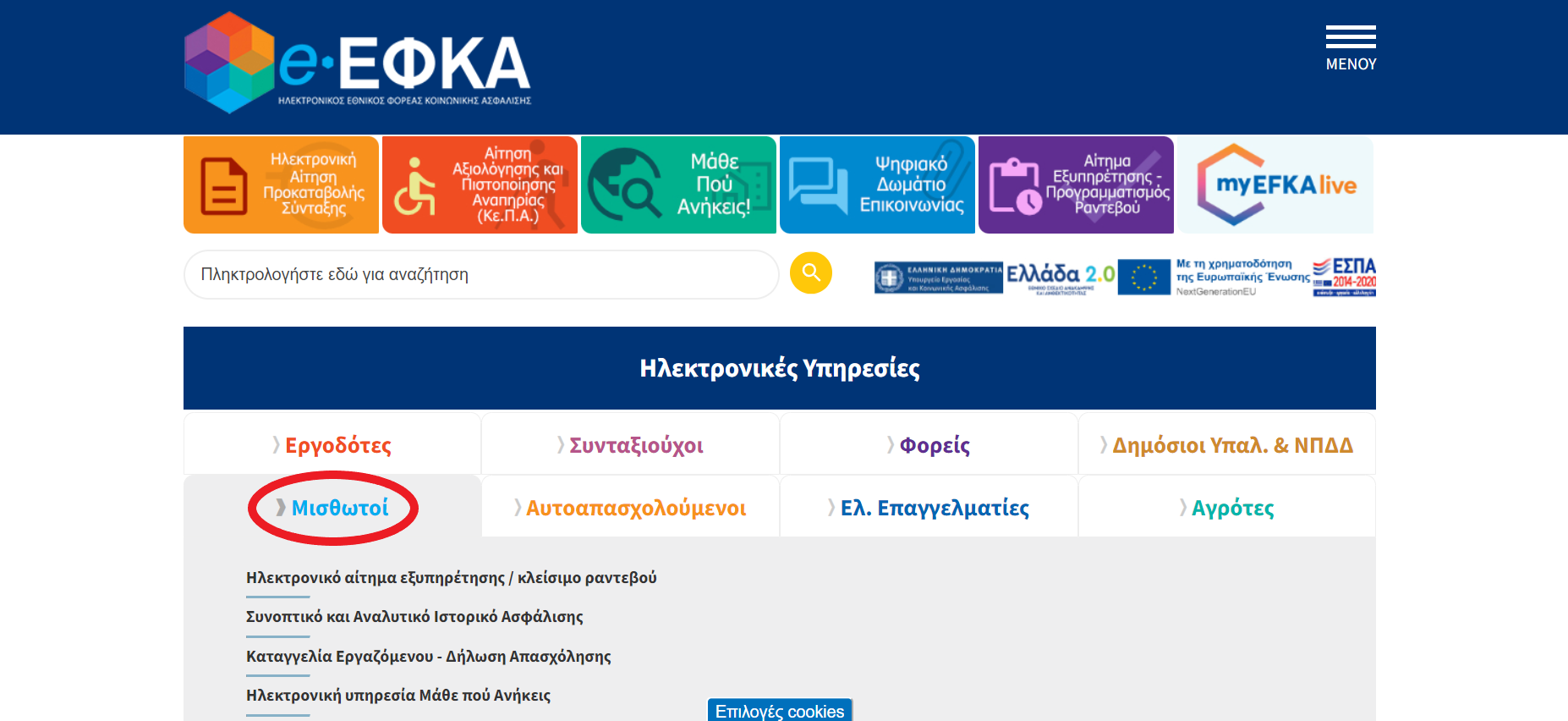
- Click on “employees”
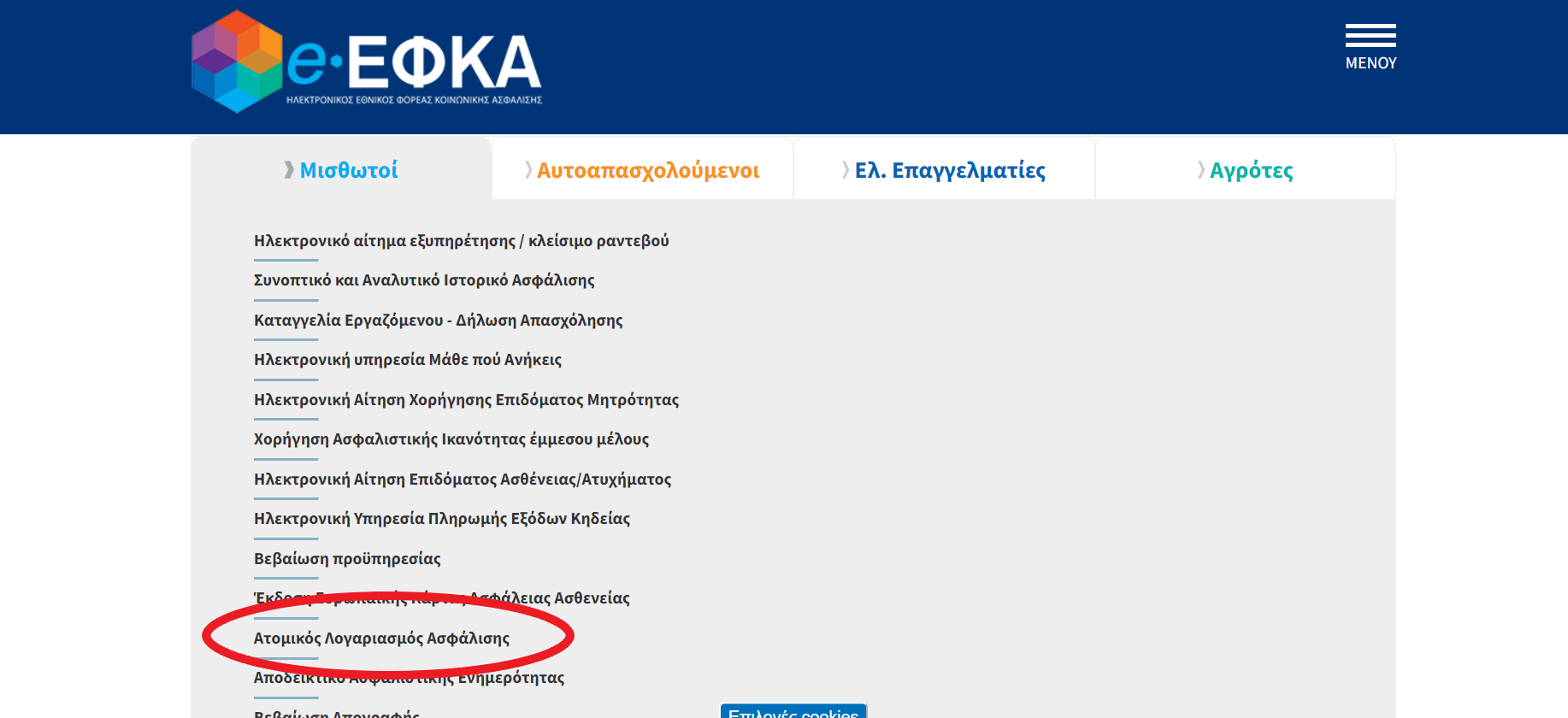
- Click on “Individual insurance account”
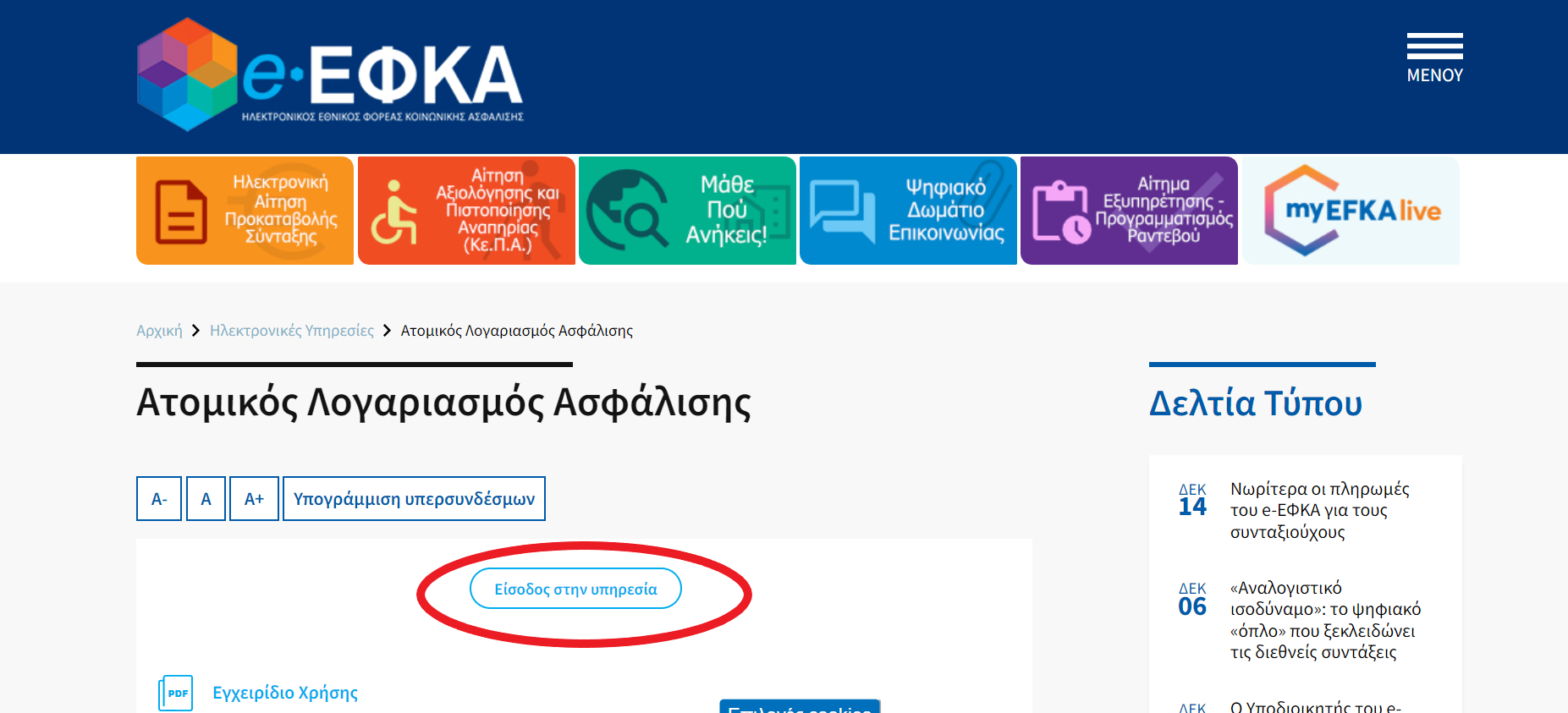
- Login to the service
- Continue with taxisnet
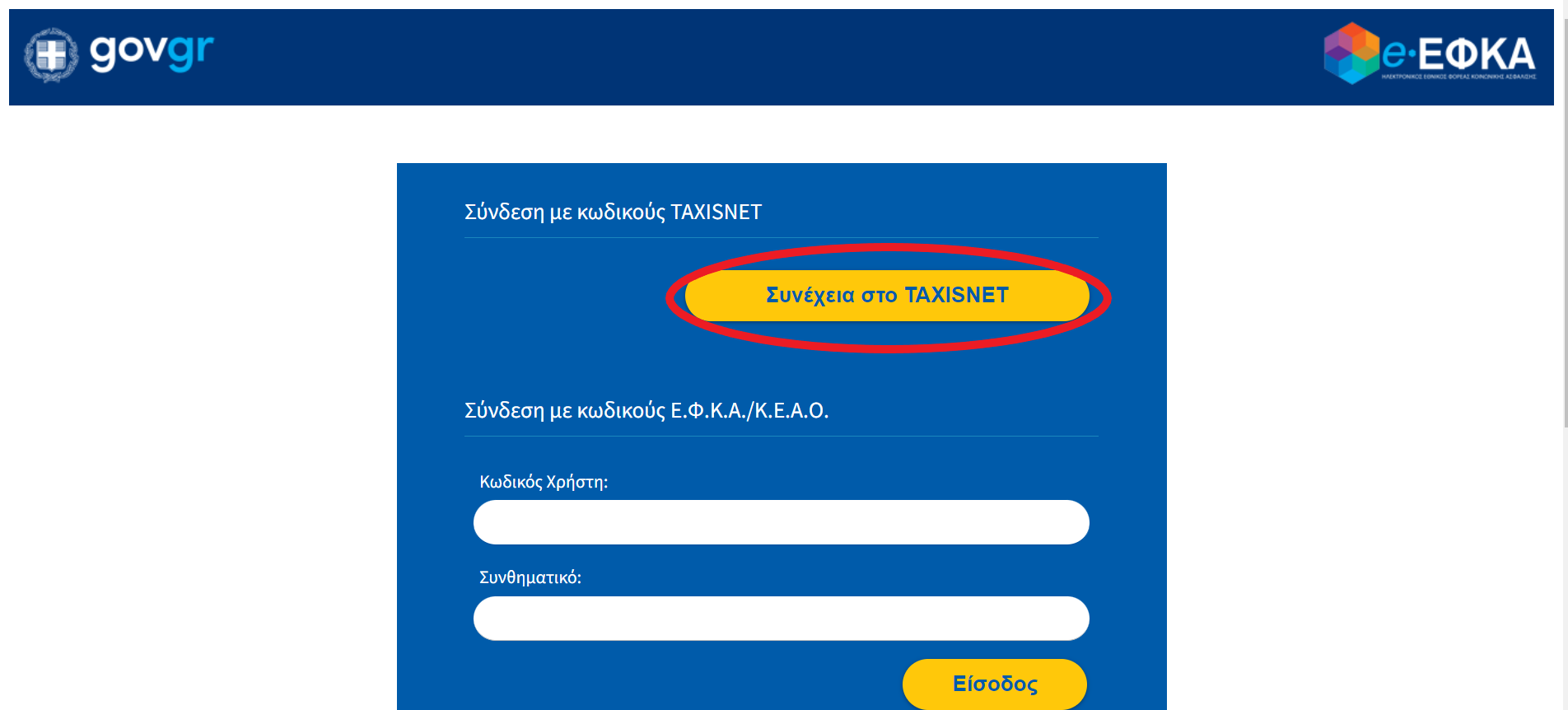
- Here you will need your taxisnet codes, if you have a tax ID (ΑΦΜ), you can get the taxisnet codes.
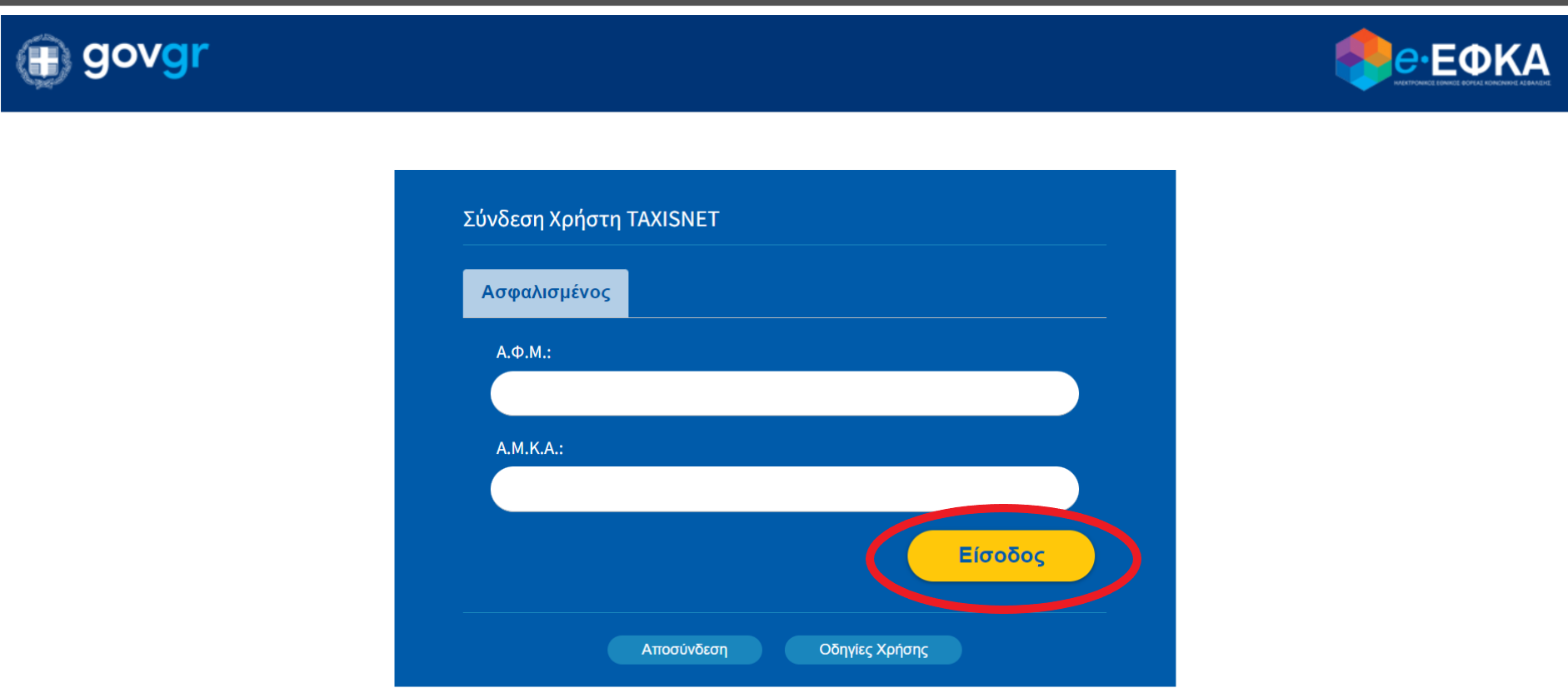
- After that you will need your ΑΦΜ number and your AMKA. Fill them in and click on
“Login”
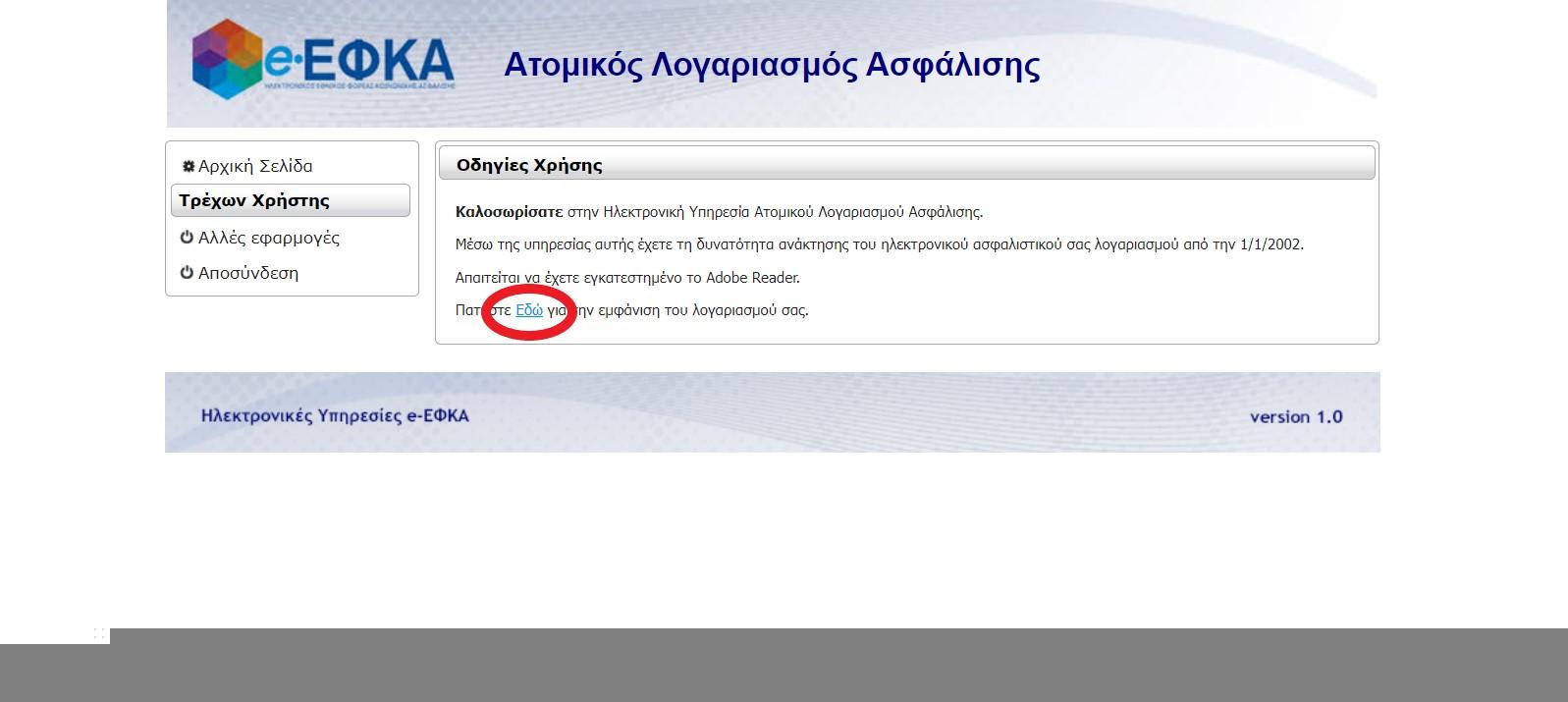
- Click on the blue underlined word “here”
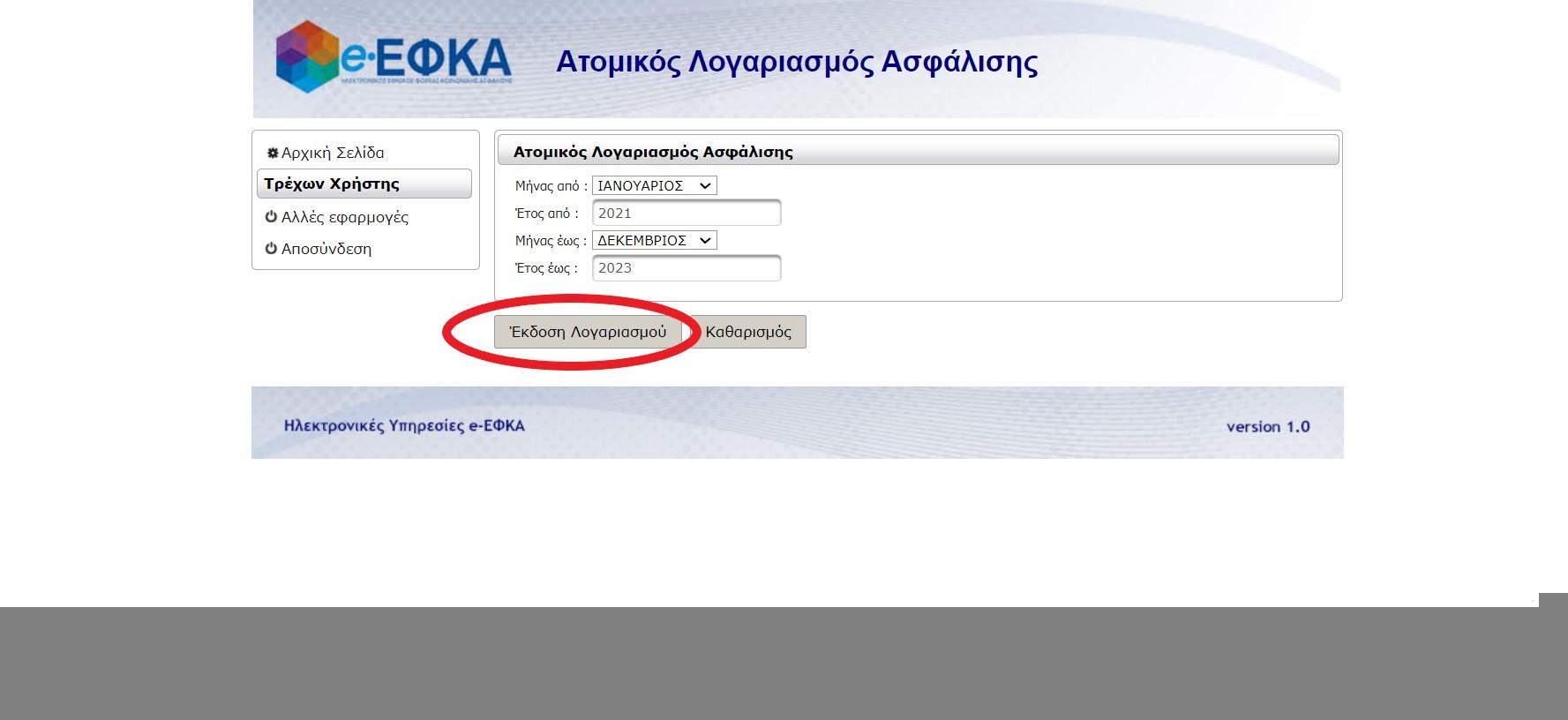
- Choose the work period you want to see. Choose from one month/year, to
month/year. Then click on the “issue account” button
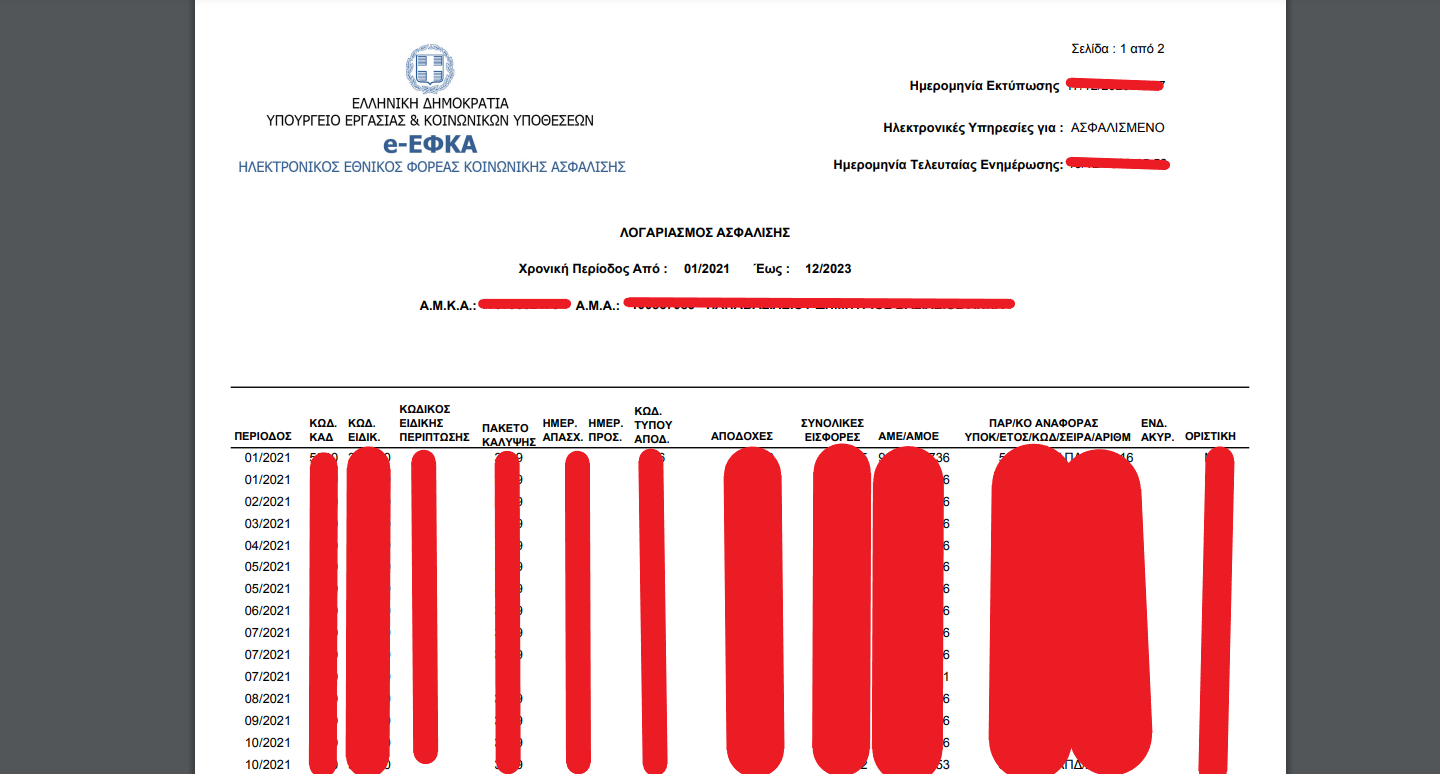
- This is a detailed list of your declared earnings. In the first column from the left, the
date (month/year) is shown. In the column that appears like this: ΗΜΕΡ. ΑΠΑΣΧ., shows how many days the employer has declared that you worked this month.